Thursday, November 5, 2009

The Power of Words


We’ve talked about pain and suffering and found that it is part of our human condition. But how do we ease suffering in the world?

The power of words can be a sword for truth or for hate. And the power of words commands either healing or injure.

Doubt it? Dr. Masaru Emoto is a scientist in Japan whose work has been to photograph different types of water in their crystalline form…with a twist. Not only has he taken water from different sources, but he has spoken words to the water as well. Yes, I said he’s talking to water. Odd? I thought so too until I read his New York Times bestselling book, “The Hidden Messages in Water.”

The pictures are amazing and the idea is revolutionary with regards to how we view nature’s most precious resource. The above link will show you some of the pictures including some of the words Dr. Emoto has spoken to water before he’s crystallized and photographed it. Quite breathtaking.

As you scroll down you see pictures of different crystals and how they react to different spoken words. The words “I love you” or “thank you” create beautiful crystal shapes, while the words, “You stupid fool” or “I hate you”, create malformed crystals. Don’t believe it? Try the experiment for yourself.

So the words we speak can transform—and if you read about Dr. Emoto’s work you see that because humans are made up of water, those words affect our very being. Three pictures caught my eye especially on that webpage. The words, “thank you,” “love and appreciation,” and “You make me sick…” Also further down I was intrigued by the idea that praying changed water too.

Recall a time when something to awful was spoken to you that rocked the very core of your being. Now remember a time when you heard the melodic words, “I love you.” I don’t know about you, but even now those experiences are still with me.

The simplest words of love and prayer have powerful effects. Our words contain consequences for suffering. How many times have we prayed for someone and stopped to wonder if our prayers, our words had any effect on the situation? Here we see it! We see that God has put into our very environment the simplest way to see the effects of prayer. If He created water to have this result, how much more is He listening to our very inner most thoughts and prayers?

Knowing this trait of water, understanding that our words mean something, does this affect what we say to each other? How will you greet your loved ones now that you know your words mean everything?

Wednesday, October 28, 2009

Poor Design Part 2


This is an intense posting, so be prepared! I've broken all the rules, including the length of this posting. But the topic is important, in fact it's critical in understanding our human nature and where we exist as part of Creation. So good luck and hope you enjoy!

Two weeks ago we talked about science versus medicine and the human condition. I also said I would talk about why pain exists.

Have you ever had a chronic condition or a long term cold that was miserable? How did you feel after the cold or condition ceased? Relieved, peaceful, grateful? Maybe all those things. Pain reminds us of what we have when we enjoy good health. It also reminds us that our time on this earth is temporary.

Paul says this very well in Romans when he says, “Brothers and sisters: I consider that the sufferings of this present time are as nothing compared with the glory to be revealed for us.” (Rom 8:18) While Paul was talking about the persecution of Christians, he was also considering the temporary state of our being.

To be human for me means that for a short while, we live on this earth and we live in relationship with others and with God. Our bodies are a temporary state, designed to carry us through this short-term three-dimensional experience. The pain we endure comes from living in this state and no one escapes unscathed. But, it is temporary and pain does provide purpose. The death of this body is inevitable, no one has ever avoided it. The endurance of the spirit is eternal and not limited to this body.

Though intellectually we may understand what this means, it is still hard to endure and hard to incorporate. We all experience self-preservation. Plus, Jesus healed many people, he did not tell them to suffer. It is in our very nature to want to heal those who are suffering and it is directed so by Christ during his humanly mission He said, “For I was hungry and you gave me food…ill and you cared for me…Amen I say to you, what you did for one of these least brothers of mine, you did for me.” (Matt 35-40)

Recently Pope Benedict XVI wrote an encyclical entitled “In Charity” in which he describes the many ways in which we should live. He talks in detail about being stewards of this earth and each other on topics that include fair trade, helping the poor, using the stock market responsibly, and taking care of the earth. He also talks in detail about the role of technology with regard to human dignity, in particular how we use medical technology to better society. He says, “In this type of culture, the conscience is simply invited to take note of technological possibilities. Yet we must not underestimate the disturbing scenarios that threaten our future, or the powerful new instruments that the “culture of death” has at its disposal. To the tragic and widespread scourge of abortion we may well have to add in the future — indeed it is already surreptiously present — the systematic eugenic programming of births. At the other end of the spectrum, a pro-euthanasia mindset is making inroads as an equally damaging assertion of control over life that under certain circumstances is deemed no longer worth living. Underlying these scenarios are cultural viewpoints that deny human dignity.” (Chapter 6, #75)

This means that technology should be used to help suffering, not to eliminate the sufferers. For example, technology allows us to know before the birth of a child whether or not that little person has debilitating birth defects. However, most times, if birth defects are discovered, the life of that baby is eliminated, snuffed out. Very few times is technology used to help repair the birth defect. Instead of eliminating the suffering, we’ve chosen to eliminate the sufferer. There are many more examples like the case of Terri Schiavo, aiding those to kill themselves, etc.


Do we see that in these cases, technology has not helped at all? In fact, it has hurt us. No longer do we show mercy and engage in helping the sufferers, instead we see our job as showing mercy by “putting them out of their misery.” But are we putting them out of their misery or ours? Is this simply a case of convenience for the rest of us, instead of an opportunity to reach out in mercy. Have we forgotten the beatitudes set forth by Christ? As said in the previous posting, we have eliminated hope.

Our attitude toward medicine is a sterile reverence towards science. We try to solve many of today’s sociological problems by applying science, by employing what we’ve learned through science. However, what if instead we took what we’ve learned through science and applied it with what we know about God and creation? What if we looked at solving the world’s problems with both science and love? Have we bothered to look at the problems from our Creator’s point of view? Should we?

Lots of questions, but necessary to contemplate if we are truly interested in improving this world we temporarily call home.

Next week, we’ll bring it full circle as we talk about mending the suffering in and of this world. See you then.

Sunday, October 11, 2009

Poor Design Part 1


I saw an orthopedic doctor last week to help me address the nagging problem I probably received from all my years of volleyball and softball. As the doc was explaining the issue, he showed me how the different muscles and tendons moved. Twice he said, “We’re poorly designed.”

The first time I heard this I ignored it as a slip of the tongue. When he said it again it hit me right between the eyes. Do all doctors think we’re “poorly designed?” The fact that we get diseases or broken bones or encounter arthritis or a multitude of infirmities, does that make us weak?

To me, the fact that we can move at all, shows tremendous thought in our design. The idea that I can think about moving my fingers across my keyboard to write this blog means that I am more than just a poorly designed creature. I am human.

What is a human? We could go on and on about the myriad of definitions of what it means to be human, but what would we accomplish? We know we have a form, we are body, mind and spirit, we have a conscience, etc.

What if we asked a different question? What if we asked, “What does it mean to be human?” Now that question could take some time to answer. What do you think?

Has the human condition benefited from science and medicine? Undoubtedly, yes! For a long time we’ve realized that the practice of medicine is not enough. If we are body, mind and spirit, then we need to address our spirit in order to keep us whole.

Science has regrettably left out half of the story, which in turn leaves the facts of the human condition sterile and cold. The fact is there is no redemption in medicine.

Dr. John Bruchalski agrees. “What happens in medicine is that science and technology bring progress; they don't bring redemption. The only person who brings redemption is Christ. So if you can't tie the two together, you're lost.”

Without redemption there is fear. Again, this doctor reminds us the truth. “What happens is, science and medicine have literally confined faith into the realm of private experience. And by making it private, it deprives the world of hope. The answer to fear is ‘Jesus, I trust in You.’”

Visit next week when we look at why pain exists and we address our “poor design.” In the meantime, share what you think it means to be human. I’d love to hear your thoughts.

Tuesday, September 29, 2009

The Energy From Within


We look up at the stars at night in wonder. They are so far away, but they have so much light to share. We’re so enamored by stars; we call those human beings who are famous or popular, “stars.” We say things like, “You are the light of my world,” “he is a rising star in the sports world,” and “I want to be a superstar.” So what is it about stars that we want to be them?

Some would say it’s just a metaphor for shining bright, but I think it’s something more.

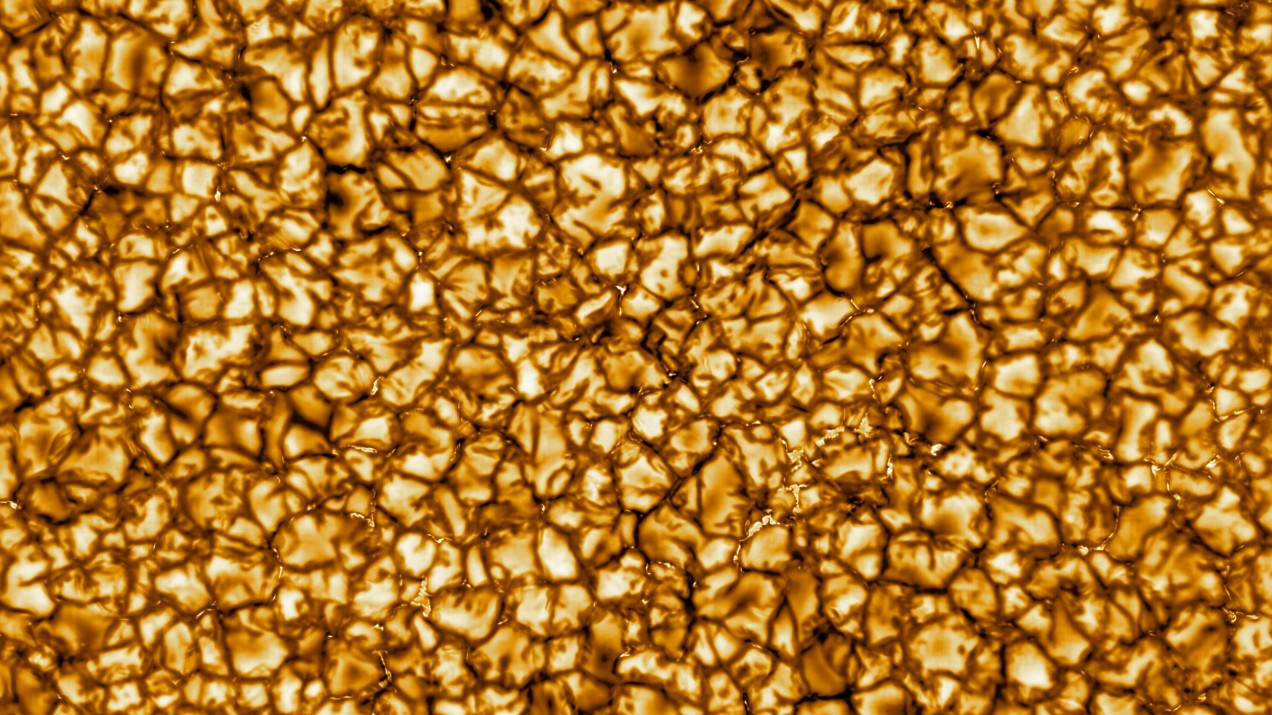
I looked up some famous pictures of celestial bodies (stars) and read about them. I read about what makes a star bright. While looking at some NASA photos, I came across the following definition:

Fusion: A process where nuclei collide so fast they stick together and emit a great deal of energy. In the center of most stars, hydrogen fuses together to form helium. Fusion is so powerful it supports the star's enormous mass from collapsing in on itself, and heats the star so high it glows as the bright object we see today. http://apod.nasa.gov/apod/lib/glossary.html

Do we know why stars were created that way? What is the thing, that fusion, which keeps them from collapsing?

Looking deeper into the definition of fusion, the online Merriam Webster dictionary gives these responses:
2: a union by or as if by melting: as a: a merging of diverse, distinct, or separate elements into a unified whole 3: the union of atomic nuclei to form heavier nuclei resulting in the release of enormous quantities of energy when certain light elements unite


Hmmm. Can we apply this same fusion to human beings…“a merging of diverse, distinct or separate elements into a unified whole?” We each have diverse feelings, separate elements of our being that we build on. Many times, we want to be happy but are sad, we want to help others but are afraid, we want to be better people, but have forgotten how.

What happens when we ask God with our whole heart for help with these diverse elements?

He NEVER lets us down. He gives us the strength to find solutions to our nagging issues, and ultimately gives us peace to handle whatever situation we need to mend.

You know that feeling you get when you are so happy—that warmth, contentment, and love that builds inside? When we feel this way, we feel as though we can take on the world! That positive energy keeps our enormous mass from collapsing in on itself. That is the fusion of God with our souls. That is the “union by or as if by melting,” that is our heart in union with God.

The same energy that the stars in the heavens contain is the energy that we contain when we unify ourselves to our God. We can do that in our daily tasks, or in some big problem we feel overwhelmed with, or in some special thing we’d like to accomplish.

Feel like a star today—because you are. Shine bright today because you can. Live life to the fullest because, “with God all things are possible.” (Matt 19:26)

Wednesday, September 16, 2009

Splendor of Creation


I took the summer off my blog and spent it with my kids doing all the fun summer things. As a family, we took made the annual weeklong trek up to Rocky Mountain National Park to hike, relax, and enjoy the fun things about the town of Estes Park. It’s become almost a ritual for us. Every time we go, I renew my love for those beautiful mountains and all of God’s amazing creation. (Today there’s even a picture of RMNP for you!)

Today I talked to a relatively new friend who lives back east. He saluted the Cape Cod area and New England in general. He boasted that New England was the best place in the world to live. He even (I’m still shocked) boasted that it was better than Colorado!

Imagine my shock! Well, we went at it for a while, but neither party won the other over.

However, it did get me thinking. Isn’t it amazing all the different places, climates, mountain ranges, deserts, oceans, and islands God created just on Earth alone? There is literally something for everyone. It’s as if God sat back and said, “I’m going to create these amazing creatures called humans. I’m going to tell them to be fruitful and fill the earth. Subdue it, and be stewards of it. So I better make it an amazing place that they can live in and thrive.”

A few blogs ago, we learned that the Hebrew translation for the first six words of the Bible is, “In the beginning of God’s creating…” We reasoned that the active word, “creating” meant that creation never really ends.

We see that today in the thousands of new species of plants and animals that pop up around the world each year. Australia alone found 1300 new species of both varieties just in the last decade. One of the most popular has been the flesh-eating pitcher plant that can “consume small rats, mice, lizards and even birds.

Wow!

God’s creating process doesn’t end there. Each day approximately 216,000 new human beings are born. Each of those precious little ones carry their own unique DNA rich with traits such as eye color, personality characteristics and qualities that no one else has.

We live on a planet lush with constant new creation. Something for everyone! I know I couldn’t be that creative, could you?

Sometimes we are so stuck in our everyday routine that we forget to appreciate the constant creation around us.

God doesn’t. I think that’s why he waits until we’re quiet to talk with us. He calls us to Him in the beauty of the flower, the stroke of the breeze, and the song of the bird. He kisses us goodnight in the splendor of the sunset and beckons us to arise with each brilliant sunrise.

Still doubt the love of God? Revisit my blog from November 21st of last year and remind yourself of how much God really loves you.

In the meantime, while my hat is off to my friend back east, I will sit on my Colorado porch and enjoy the creation the Lord has given me. Thanks, Gerry, for your wise counsel, you helped a great deal. And don’t worry, I’m sure Cape Cod is just as spectacular as the Rocky Mountains—maybe…

Friday, June 5, 2009

Defining Our Carbon Footprint


I did it. I took the plunge. I went to the Nature Conservancy website and took the test. Just what is my carbon footprint? How am I affecting the planet?

I cheated. I took the test twice and used first me as an individual and then me in a family of eight. Neither one are true.

Nevertheless, I wanted to see what effect one person has versus a larger family with regard to carbon dioxide emissions. Current articles argue that large families are an “eco-crime” and that we need to be “phasing out the human race.” Really?

This is what I found out.

As an individual driving 10,000 miles a year in my small gas-efficient car (work and back), no air travel, eating meat at meals in a house that is energy efficient and recycling everything I can, I will create 41 tons of carbon dioxide per year—which is above the national average. Sounds like a lot, doesn’t it?

Changing my profile to be part of a family of eight, I drive a large boat (less than 20 miles to the gallon) a mere 20,000 miles a year, with no air travel, eating meat at meals in a house that is energy efficient and recycling everything possible, my family will create 120 tons of carbon dioxide per year—which is below the national average. Perplexing. (A family of eight creates less carbon dioxide than three individuals. Hmmm.)

As an individual I’ll use more carbon dioxide than if I were in a family of eight according to this calculator test. I’m missing something.

Planet conservationists are too.

These environmentalists see me and you as mere numbers and calculate us by our carbon dioxide emissions. They don’t account for the following: We are created in the image and likeness of God (Gen. 1:28) and that according to the Creator, we are so important that He sent his Son to die for us, to save us from our sins. Why would a God want us to eliminate ourselves from His plan?

In fact, what we’ve eliminated is trust in God and an ideal of stewardship. We have forgotten that God created the Earth and that HE has a plan for everything in it. We have forgotten that God left us as stewards of this Earth and that it is our task to take care of it, not by the way of removing ourselves from it, but by being responsible citizens of it.

A godless society has reduced us to carbon dioxide output. Do we really think that God sees us that way? Should we see ourselves and others that way?

A while back I read an article where a British woman chose to sterilize herself to reduce her carbon footprint. Do we really think that a God that created us in His image, wants us to think so little of ourselves? Does this woman think so little of herself, that she’d like to just disappear?

What happened to the God who said, “Look at the heavens and count the stars. If you are able to count them, so shall your offspring be.” (Genesis 15:5)

Did God not mean what He said? Did he abandon us?

No, we’ve left Him.

It’s time to come back.

We are not defined by our carbon footprint. We are defined by our actions, our beliefs and whose Footprints we follow.

Wednesday, May 27, 2009

Maybe The Neanderthals Aren’t Dead After All


Last time we talked about Dr. Spencer Wells and his genetics work. He spent over ten years gathering human DNA samples from all over the world to show that the first man came from Africa about 60,000 years ago. He uses a marker in the Y chromosome that remains unchanged from father to son to help him determine human ancestry.
However, what we didn’t talk about was something that Dr. Wells found that is more applicable to who we are today. The genetic makeup of human beings from around the world is more alike than we think. Though humans have over three billion base pairs in 23 chromosomes, “…we're all incredibly similar. 99.9% identical at the genetic level.”


So, though we have green eyes or brown eyes, we come from Europe or South America, we are all related—99.9% related. That’s an extremely high percentage, isn’t it?

Does it make you pause and consider the implications for humanity? Does it encourage your mind to reflect on a God that designed us?

Christians, Jews and Muslims know there was a first father and mother, but science has muddied the waters and encouraged us to believe that the Bible is just a series of stories—stories about belief, not of reality. Jesus came along and reiterated what his Father had accomplished with the creation of man by telling us, “Love thy neighbor…” and “Whatever you do to the least of my brothers…”

The movement to keep science and faith separate is divisive as well as counterproductive. It is only when we take ALL evidence and put it together that we get the full picture. Science uses nature to deduce how the world works. That is only half the story. The Bible persuades us to remember that there is more than HOW there is a WHY. It beckons us to make sense of our purpose.

The cooperation of these two disciplines (yes, theology/faith is a discipline) will allow both sides to see the world differently. Science allows faith to see the miracle that the Earth is in a special place and the delicate balance that it maintains to support life. Faith allows science to question the meaning of why the Earth is here. You cannot fulfill your destiny as a human being without answering BOTH questions.

What would happen if we looked at science from a faith perspective? What if we looked at how molecules work and said, “Hmm, the way these molecules work reflects the love of God.” Perhaps we could find a cure for cancer if we looked at the problem from the eyes of our Creator. We could ask what is missing, versus how do we kill this. It’s all in the perspective.

Going back to Dr. Wells’ research, we see that in his discoveries of the origin of man he has discovered something that Christians already know. A reporter made the following comment to Dr. Wells, “You are very critical of racism.”

To that, Dr. Wells simply responded, “Yes. We are all much closely related than we ever expected. Racism is not only socially divisive, but also scientifically incorrect. We are all descendants of people who lived in Africa recently. We are all Africans under the skin."


Though Dr. Wells may believe he is keeping science separate from faith, he has just made Jesus’ case for why we are called to love our neighbor. I wonder if he recognizes that. I wonder if we recognize that.

Typically, we use the term Neanderthal to describe someone who does not see others as equals or when they refuse to use logic and forward thinking. While the DNA of the Neanderthal may be extinct, unfortunately they still exist.